
Overview
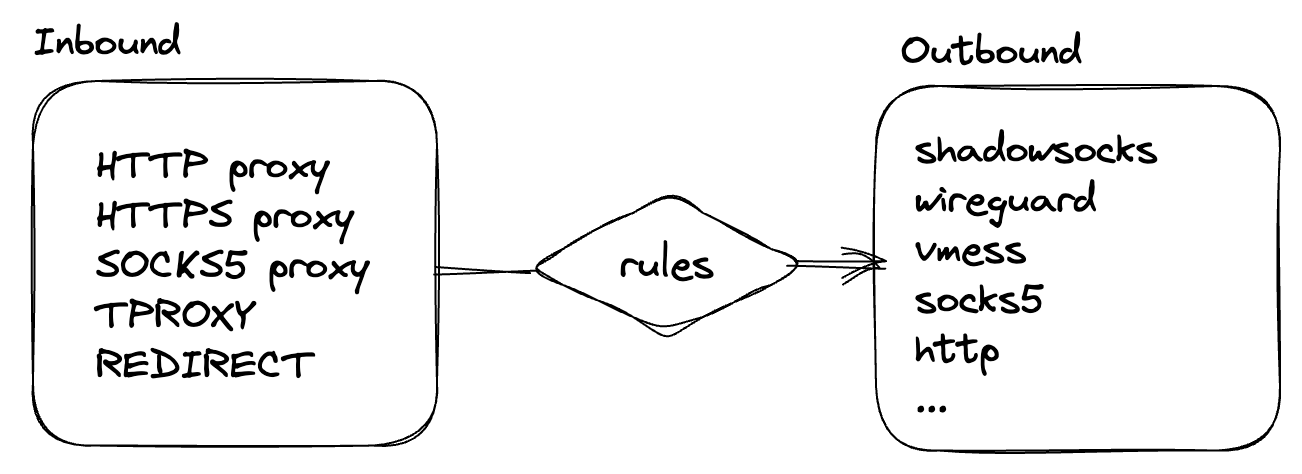
Clash configuration is a layered system: inbound listeners accept local traffic, DNS resolves domains, outbounds define routes, proxy groups organize choices, and rules connect requests to policies.
Mental model
When a request enters Clash, it is normalized, matched against rules and sent through the selected policy. If DNS or TUN is involved, the request may need additional mapping before matching.
Editing strategy
Change the smallest possible part of a profile. Start with ports and mode, then proxies and groups, then rules and DNS.
Support Checks
If a GUI shows node list, inspect providers and groups. If nodes exist but traffic has a problem, inspect rules, DNS and selected mode.
Related pages
Reference examples
These examples mirror the corresponding Chinese documentation page so the English page carries the same configuration material.
# TYPE,ARGUMENT,POLICY(,no-resolve)
TYPE,ARGUMENT,POLICY(,no-resolve)